
Low-competition keywords are the easiest way for a new or growing website to earn organic traffic. Instead of fighting established brands for broad terms, you target specific searches where the current results are weak, outdated, or not fully aligned with what users need.
This guide walks through a practical, repeatable process: find keyword ideas, test whether they are truly easy to rank for, and turn the best opportunities into content that can move up Google’s rankings.
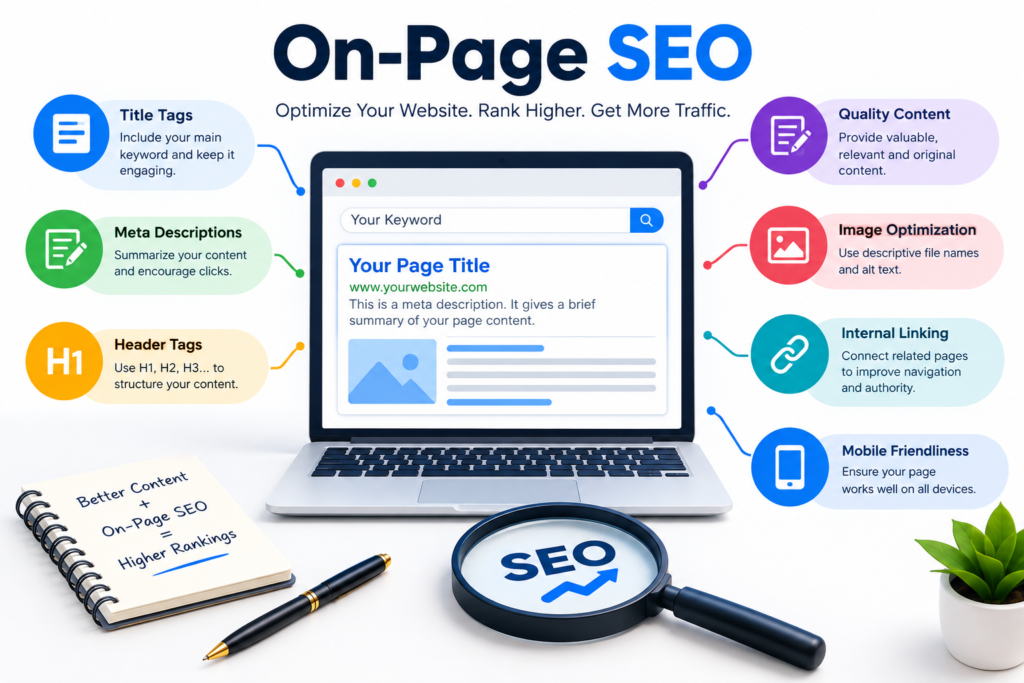
Once you identify the right search intent, the next step is to optimize your page accordingly. Learn these on-page SEO techniques to optimize website content to improve content relevance and search visibility.
What Is a Low-Competition Keyword?
A low-competition keyword is a search term that relatively few strong pages are trying to rank for. These keywords often have lower individual search volume, but they can be easier to rank for and may bring highly relevant visitors to your site.
For example, “email marketing” is broad and highly competitive. A phrase such as “email marketing checklist for new Etsy sellers” is more specific, clearer in intent, and more likely to have a realistic ranking opportunity for a smaller site. Long-tail keywords—usually three or more words—often fall into this category.
A good low-competition keyword is not just “easy.” It should also have:
- Real search demand
- Clear search intent
- A connection to your products, services, or expertise
- A search results page you can realistically compete with
- Potential to bring leads, subscribers, sales, or ad revenue
Start With Your Audience, Not a Tool
Keyword tools are useful, but the best opportunities often begin with real customer language. Look at the questions people ask before they buy, sign up, book a service, or try to solve a problem.
Collect ideas from:
- Customer support emails and live-chat questions
- Sales calls and discovery calls
- Product reviews and FAQ pages
- Reddit, Quora, Facebook groups, and niche forums
- Comments on competitor blogs or YouTube videos
- Your own Google Search Console performance data
Write down the exact phrases people use. If customers ask, “Why does my WordPress site load slowly on mobile?” that is often a better starting point than simply researching “website speed.”
Use Google’s Free Keyword Clues
Google itself reveals many keyword opportunities before you ever open a paid SEO tool.
Try these methods:
- Google Autocomplete: Type a broad topic into Google and pause. The dropdown suggestions reflect common searches.
- People Also Ask: These questions can become H2 headings, FAQ sections, or standalone articles.
- Related Searches: Scroll to the bottom of the results page to find closely related queries.
- Google Trends: Identify topics that are growing rather than declining.
- Google Search Console: Check queries where your site already receives impressions but ranks below the top positions. These can be quick-win opportunities.
Create a simple spreadsheet with columns for the keyword, source, estimated intent, notes, and possible article angle.
Focus on Long-Tail and Question Keywords
Long-tail keywords are usually more specific and less crowded than short head terms. They also tend to attract people who know what they want, which can improve engagement and conversions.
Instead of targeting:
- “Yoga”
- “Weight loss”
- “CRM software”
- “Digital marketing”
Try phrases such as:
- “Beginner yoga routine for desk workers”
- “Weight loss meal plan for shift workers”
- “Best CRM for solo real estate agents”
- “Digital marketing strategy for local dental clinics”
Question-based keywords are especially valuable because they map naturally to helpful content. Search for phrases beginning with “how,” “what,” “why,” “best,” “vs,” “for beginners,” and “near me,” depending on your niche.
Check Keyword Difficulty—But Do Not Trust It Blindly
Keyword difficulty scores can help you filter a long list quickly. Many SEO tools provide a score that estimates how hard it may be to rank for a keyword. As a general starting point, newer sites often look for lower difficulty scores, though the ideal threshold depends on your site’s authority and niche.
However, a low difficulty score is only a signal—not proof. A keyword with no data may simply be unmeasured, and a keyword with a low score may still be dominated by authoritative sites. Use difficulty as a filter, then verify the opportunity manually.
Perform a Manual SERP Analysis
Search each promising keyword in an incognito browser window, ideally from the location where your target audience searches. Review the first page carefully.
Ask:
- Are the top results major publications, government sites, or global brands?
- Are there forums, small blogs, or thin pages ranking?
- Do the results directly answer the query?
- Is the content outdated, incomplete, or difficult to read?
- Does Google show videos, product pages, local listings, or featured snippets?
- Can you add original examples, data, screenshots, templates, or firsthand experience?
If the first page contains weak blog posts, old guides, forum threads, or pages that do not fully match the search intent, that is often a strong sign of opportunity.
Check Backlinks and Page Strength
A website may have a strong overall domain, but the individual page ranking for your keyword may have few backlinks. Look at page-level referring domains rather than judging only by domain authority.
You do not need to outrank a massive brand on every metric. You need to create the most useful, focused, and trustworthy page for that particular search.
A realistic target page might:
- Answer the main question immediately
- Include practical steps, examples, or a checklist
- Cover related subtopics people also search for
- Use clear headings and a logical structure
- Link to relevant pages on your own site
- Show experience, evidence, or original insight
Match the Search Intent
Search intent is the reason behind a query. If Google ranks product pages for a keyword, a long informational blog post may struggle to rank. If Google ranks step-by-step guides, a sales page may not be the right fit.
The main intent types are:
| Intent | What the searcher wants | Best content format |
| Informational | To learn something | Guide, tutorial, explainer |
| Commercial | To compare options | Comparison, review, “best of” list |
| Transactional | To buy or take action | Product, service, pricing, signup page |
| Navigational | To reach a specific site | Brand page or login/support page |
Before writing, search the keyword and create the format Google is already rewarding—then make your version more helpful, current, and complete.
Group Keywords Into Topic Clusters
Do not create a separate weak article for every minor keyword variation. Group related searches into one strong page or a content cluster. This prevents keyword cannibalization, where multiple pages on your site compete against each other.
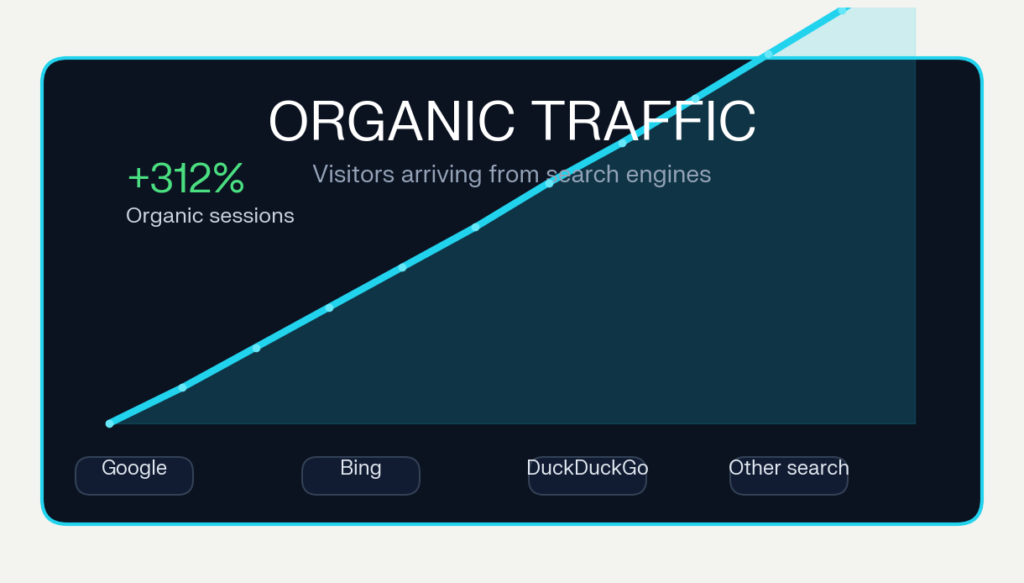
Building relevant topic clusters is an effective way to support long-term SEO growth. Explore how to increase organic traffic without paid ads using keyword research, content optimization and a well-planned SEO strategy.
For example, a cluster around “email marketing for freelancers” could include:
- A main guide: “Email Marketing for Freelancers: A Practical Guide”
- Supporting article: “How to Write a Freelance Welcome Email”
- Supporting article: “Freelance Email Newsletter Ideas”
- Supporting article: “Email Marketing Mistakes Freelancers Should Avoid”
Link each supporting article to the main guide and to related pages. This helps Google understand your topical expertise and gives readers a clear path through your content.
Prioritize the Best Opportunities
Once you have a list, score each keyword rather than choosing based on search volume alone.
Use a simple scoring system:
| Factor | What to check |
| Relevance | Does it match your audience and business goal? |
| Search demand | Is there enough volume or traffic potential? |
| Competition | Are the current top results beatable? |
| Intent fit | Can your content format satisfy the query? |
| Business value | Can it lead to a sale, lead, subscriber, or authority? |
| Content gap | Can you add something the current results lack? |
A keyword with 150 monthly searches may be more valuable than one with 5,000 if it attracts buyers, matches your expertise, and has a weak SERP.
Turn Keywords Into Ranking Content
Finding the keyword is only half the work. To improve rankings, your page must satisfy the search better than the current results.
Follow this structure:
- Put the main answer or solution near the top of the page.
- Use the primary keyword naturally in the title, URL, introduction, and at least one heading.
- Add secondary keywords and related questions where they fit naturally.
- Break the content into scannable sections with descriptive H2 and H3 headings.
- Include examples, images, tables, checklists, or original insights.
- Add internal links to related pages and external links to credible sources when useful.
- End with a clear next step: read another guide, download a template, contact you, or view a product.
Apart from keyword selection and quality content, your website must also be technically accessible to search engines. Learn about technical SEO issues affecting website indexing and how to fix them.
Refresh Existing Pages for Quick Wins
Your fastest ranking improvements may come from pages that already rank on page two or at the bottom of page one. Google Search Console can show queries bringing impressions to your site, along with average position and clicks.
Look for pages where:
- You rank between positions 5 and 20
- The page receives impressions but few clicks
- The title and meta description do not match the query
- The content is thinner than competing pages
- The page has not been updated in a long time
Update the content, improve the headline, add missing subtopics, strengthen internal links, and make the answer more complete. This often produces faster results than publishing an entirely new article.
Common Keyword Research Mistakes
Avoid these errors that waste time and limit growth:
- Chasing high-volume keywords with no chance of ranking
- Choosing keywords based only on low difficulty scores
- Ignoring search intent
- Creating multiple near-duplicate articles for similar terms
- Targeting topics unrelated to your products or expertise
- Publishing content without examples, structure, or a clear purpose
- Never revisiting pages after publication
Final Thoughts
Low-competition keyword research is about finding realistic gaps, not avoiding competition altogether. Start with specific audience problems, gather keyword ideas from Google and your own customer data, validate the SERP manually, and publish content that is genuinely more useful than what already ranks.
When you consistently target attainable keywords, build topic clusters, and refresh existing content, you create a sustainable path to more organic traffic and stronger Google rankings.
Pingback: how to increase organic traffic without running any ads
Pingback: Learn the best way to optimize on-page content of the website to drive more organic traffic?