On-page SEO is the practice of improving the elements on a web page—content, headings, titles, links, images, and structure—so both users and search engines can easily understand it. Done well, it helps your pages rank for relevant searches and brings in visitors who are genuinely interested in what you offer.
The good news is that you do not need to be an SEO expert to make meaningful improvements. You need a clear process, useful content, and attention to the details that make a page easy to read and navigate.
Start With Search Intent
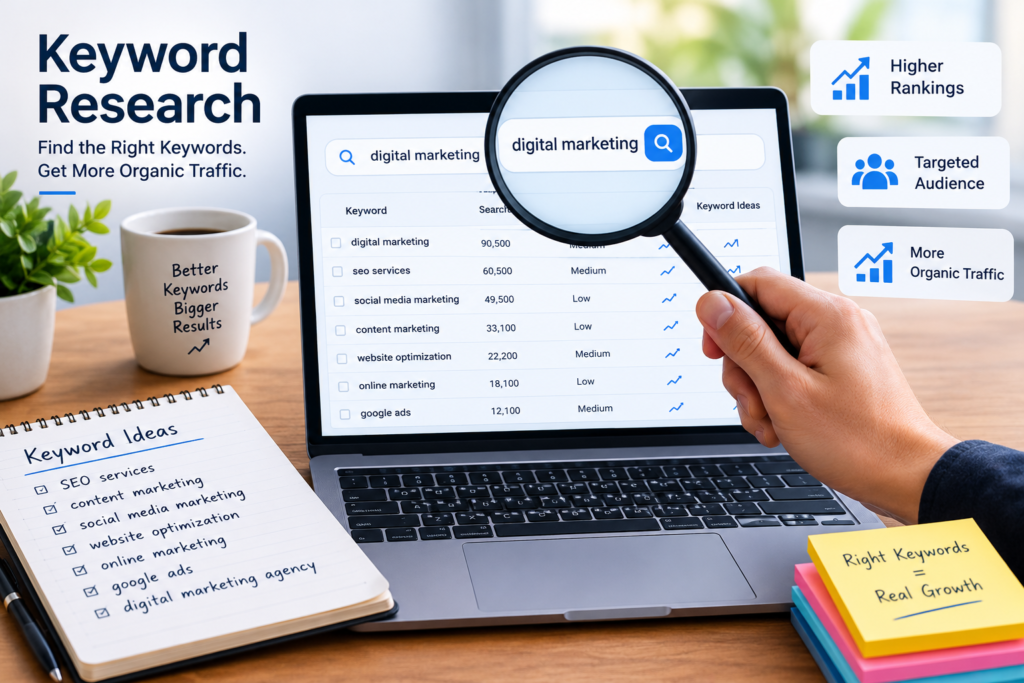
To understand search intent better, start by learning how to find low-competition keywords for your website and identify search terms that match your target audience, ask one simple question: What does the searcher actually want?
Someone searching “best running shoes for flat feet” wants recommendations and comparisons. Someone searching “how to clean running shoes” wants instructions. If your page does not match that intent, even strong keyword optimization will struggle to perform.
To align content with intent:
- Identify the main question your page should answer.
- Review the type of content already ranking: guides, product pages, listicles, videos, or tools.
- Cover related questions readers are likely to have.
- Put the most useful answer near the top instead of burying it under long introductions.
Google emphasizes helpful, reliable, people-first content that demonstrates real expertise and gives readers something useful beyond generic information.
Choose One Primary Keyword Per Page
Every important page should have a clear topic. Trying to rank one page for too many unrelated terms confuses both readers and search engines.
For example, if your page is about “email marketing for small businesses,” avoid mixing in unrelated topics like website design or paid ads. Stay focused, then naturally include related phrases such as:
- email marketing strategy
- small business email campaigns
- email newsletter best practices
- how to grow an email list
Use the primary keyword in the page title, main heading, introduction, and at least one subheading—but only where it sounds natural. Keyword stuffing makes content awkward and does not improve user experience. Google recommends using the words people actually search for in prominent places such as titles, headings, alt text, and link text.
Write Titles That Earn the Click
Your title tag is often the first thing someone sees in search results. It should clearly explain the page while making the reader want to click.
A strong title is:
- Specific: “10 On-Page SEO Techniques to Increase Organic Traffic”
- Clear: It tells readers exactly what they will learn.
- Honest: It does not promise something the page fails to deliver.
- Concise: Aim for a title that will not get cut off in search results.
Avoid vague titles such as “Our Guide” or “Important Information.” Instead, lead with the benefit: what problem the reader will solve or what outcome they can expect.
Create a Clear Content Structure
Online readers scan before they read. Clear formatting helps them find answers quickly, and it also helps search engines understand the hierarchy of your content.
Use this simple structure:
- H1: One main heading that states the page topic.
- H2s: Major sections that answer the reader’s core questions.
- H3s: Supporting points, examples, steps, or comparisons.
- Short paragraphs: Usually two to four sentences.
- Bullets and numbered lists: For steps, features, tips, or checklists.
- Bold text: For key takeaways, but use it sparingly.
Google’s guidance recommends well-organized, easy-to-read content with headings that help users navigate the page. A page with logical sections is more likely to keep visitors reading, which can support better engagement over time.
Make Your Introduction Work Harder
The first few lines decide whether someone stays or leaves. Start with the reader’s problem, then promise a practical solution.
For example:
Struggling to get traffic from Google? The issue may not be your backlinks or budget—it may be how your pages are optimized. This guide breaks down practical on-page SEO techniques you can apply today.
That introduction works because it:
- Names the reader’s pain point.
- Offers a possible cause.
- Explains what the page will deliver.
Do not spend several paragraphs explaining why SEO matters. Get to the useful part quickly.
Use Internal Links Strategically
Internal linking is closely connected with website structure and crawlability. Explore these technical SEO practices to improve website indexing to understand how search engines discover and access your website pages. They help visitors discover more useful content and help search engines understand how your pages relate to one another.
Good internal linking looks like this:
- Link from a blog post to a relevant service or product page.
- Link from a product page to a helpful buying guide.
- Link older articles to newer, updated resources.
- Use descriptive anchor text, such as “on-page SEO checklist,” instead of “click here.”
Google advises making links crawlable so search engines can find other pages through the links on your site. Avoid orphan pages—pages that exist but have no internal links pointing to them—because they are harder for users and crawlers to discover.
Optimize Images Without Slowing Down Your Site
Images make content easier to understand, but large, unoptimized files can slow down your page. Slow pages frustrate visitors, especially on mobile devices.
Follow these image basics:
- Compress images before uploading.
- Use descriptive file names, such as on-page-seo-checklist.png.
- Add meaningful alt text that describes the image.
- Use modern image formats where possible.
- Avoid decorative images that add no value.
Alt text is not just an SEO detail; it improves accessibility for people using screen readers. Describe what the image shows in plain language rather than forcing keywords into it.
Improve Readability and Page Experience
Even excellent information can fail if it is difficult to read. Your content should feel effortless to consume.
To improve readability:
- Use simple words instead of jargon.
- Break up long blocks of text.
- Add examples, screenshots, charts, or short videos where they help.
- Make sure your design works well on phones.
- Keep calls to action clear and relevant.
Google’s guidance highlights the importance of content that is well written, organized into paragraphs and sections, and easy for people to follow. A clean reading experience encourages visitors to stay longer and explore more of your site.
Update Old Content Regularly
SEO is not a one-time task. Search intent changes, statistics become outdated, and competitors publish newer resources. Updating content is one part of a long-term SEO strategy. Discover how to increase organic traffic without paid advertising by combining content updates, keyword research and technical improvements.
Review your important pages every few months and look for opportunities to:
- Refresh examples, screenshots, and statistics.
- Add answers to new questions readers are asking.
- Remove outdated advice.
- Improve headings and formatting.
- Strengthen internal links.
- Add original insights, data, or firsthand experience.
Google specifically recommends checking previously published content and updating or removing it when it is no longer relevant. Updating a strong page is often more effective than publishing another thin article on the same topic.
Add Original Value
The biggest difference between average content and content that earns traffic is originality. Anyone can summarize common advice. Fewer people can share real experience, unique data, practical templates, or a genuinely useful perspective.
You can add original value by including:
- A checklist readers can download or copy.
- A real example from your own work.
- Original research, survey results, or customer insights.
- Screenshots showing exactly how to do something.
- A comparison table that saves readers time.
- Expert commentary or a personal point of view.
Google’s ranking guidance focuses on helpful, reliable information created for people rather than content made mainly to manipulate rankings. Original insight is also what makes your page worth linking to and sharing.
A Simple On-Page SEO Checklist
Use this checklist before publishing any page:
- One clear primary keyword and search intent.
- A specific, benefit-driven title tag.
- A concise meta description that summarizes the page.
- One H1 and logical H2/H3 headings.
- The main answer presented early in the content.
- Natural use of primary and related keywords.
- Short paragraphs, lists, and scannable formatting.
- Descriptive image file names and alt text.
- Compressed images and fast-loading pages.
- Three to five relevant internal links.
- Clear next steps or calls to action.
- Updated facts, examples, and links.
- Proofreading for grammar, clarity, and accuracy.
Final Thoughts
On-page SEO is not about tricking search engines. It is about creating pages that clearly answer a searcher’s question, load quickly, read smoothly, and guide visitors toward the next useful step.
Start with search intent, structure your content for humans, optimize the technical details, and keep improving your best pages over time. When your content genuinely helps people, organic traffic becomes a natural result rather than a constant struggle.
Pingback: how to increase organic traffic without running any ads
Pingback: learn how to find keywords research for increasing organic traffic