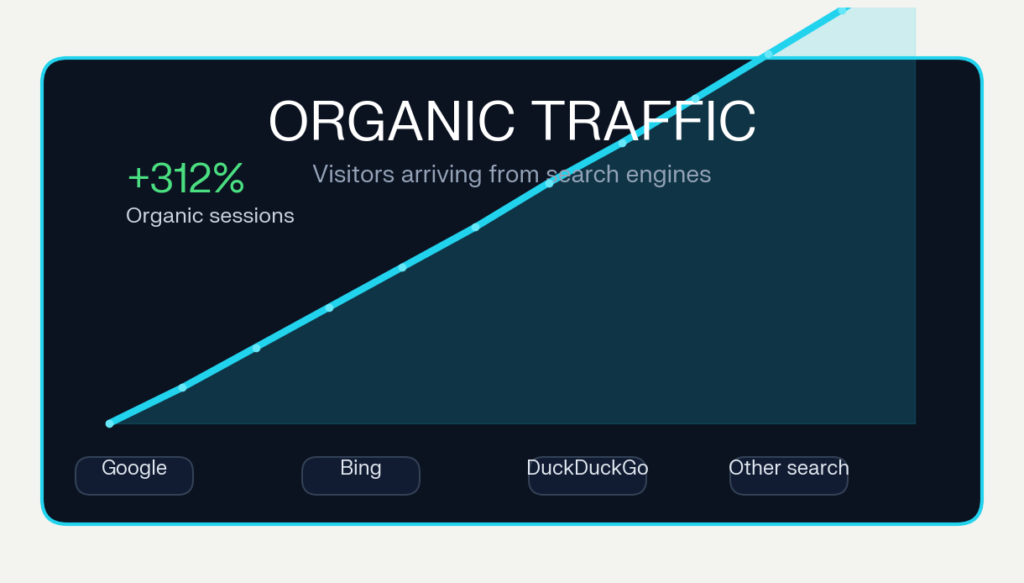
Every business wants more visitors, but not every business wants to pay for each click. Paid ads switch off the moment your budget runs out. Website content optimization bring more organic traffic, on the other hand, keeps arriving long after a page is published. The engine behind it is content marketing: useful, search-friendly content that answers real questions and earns attention over time.
If you run a business in Delhi NCR and are wondering where to begin, this guide walks through a practical, step-by-step approach. It reflects how a modern SEO company in Noida plans content for local and national brands that want steady growth without relying on advertising spend.
Why Organic Traffic Deserves Your Attention
People trust search results more than they trust banners. When someone types a question into Google, they are already interested in an answer. If your page provides it, you meet them at the exact moment of need.
Organic traffic also compounds. A well-written article can bring visitors for months or years, while an ad stops delivering the day you pause it. Over time, this lowers your cost of acquiring each customer and builds a brand that people find on their own.
Step 1: Define Clear Goals Before Writing Anything
Content without a goal is just noise. Before you plan a single article, decide what success looks like. Common goals include:
- Increasing monthly organic visits to the website
- Generating enquiry form submissions or phone calls
- Ranking for a set of priority service or product keywords
- Building authority in a specific industry or city
Tie each goal to a number and a timeframe. For example, “grow organic sessions by 40 percent in six months” gives your team something measurable to work toward.
Step 2: Understand Your Audience Deeply
The best content feels like it was written for one specific person. Spend time learning who that person is.
- Ask your sales and support teams which questions customers repeat most often.
- Read reviews and comments on your own pages and on competitors’ pages.
- Check your analytics to see which pages people already enjoy and where they leave.
- Create two or three simple audience profiles covering their role, challenges, and the stage of buying they are in.
A startup founder in Noida searching for marketing help has very different needs from a procurement manager comparing vendors. Your content should speak to each of them differently.
Step 3: Do Keyword Research With Intent in Mind
Keyword research is not about chasing the biggest search numbers. It is about matching the words people use with the pages you can realistically rank.
Group keywords by search intent:
- Informational: “how to improve website ranking” (the person wants to learn)
- Commercial: “best SEO company in Noida” (the person is comparing options)
- Transactional: “SEO services pricing” (the person is ready to act)
- Local: “digital marketing agency near Sector 62 Noida” (the person wants a nearby provider)
Use a mix of short head terms and longer, more specific phrases. Long-tail keywords have lower competition and often convert better because the searcher knows exactly what they want. Free tools such as Google Search Console, Google Keyword Planner, and the autocomplete suggestions in search itself are a good starting point.
Step 4: Build Topic Clusters Instead of Random Posts
Search engines reward websites that cover a subject thoroughly. Rather than publishing unrelated articles, organise your content into topic clusters.
- Choose a core topic that matches a main service, such as “search engine optimisation”.
- Create a detailed pillar page that gives a complete overview.
- Write supporting articles on narrower subjects, such as technical audits, link building, local SEO, and content optimisation.
- Link the supporting articles to the pillar page and to each other.
This structure helps visitors move naturally from one useful page to the next, and it signals to search engines that your site is an authority on the subject.
Step 5: Create Content That Is Genuinely Better
Before writing, search your target keyword and read the top results. Ask yourself what is missing. Then fill that gap.
Strong content usually has these qualities:
- Original insight: Share your own experience, examples, and lessons rather than repeating what everyone else says.
- Clear structure: Use descriptive headings, short paragraphs, and lists so readers can scan quickly.
- Practical value: Give steps, templates, or checklists someone can act on today.
- Accuracy and freshness: Update older posts so facts and screenshots stay current.
- Trust signals: Show author names, credentials, and real case studies.
Google’s guidance emphasises helpful content written for people first. Writing to impress an algorithm rather than to help a reader almost always backfires.
Step 6: Mix Content Formats
Not everyone wants to read a long article. Variety helps you reach more people and keeps them engaged for longer.
- Blog posts and guides for in-depth explanations
- Case studies to prove results with real numbers
- Infographics that simplify complex ideas
- Short videos for demonstrations and quick tips
- Checklists and templates that people download and share
- FAQ pages that capture question-style searches
One strong piece can also be repurposed. A detailed guide can become a LinkedIn carousel, a short video script, and an email newsletter, each reaching a different audience.
Step 7: Optimise Every Page for On-Page SEO
Great writing still needs a solid technical foundation. For each page, check the following:
- Title tag that includes the main keyword and stays under about 60 characters
- Meta description that reads like an invitation to click
- One H1 heading and logical H2 and H3 subheadings
- Natural keyword placement in the introduction, headings, and body, without stuffing
- Descriptive image names and alt text
- Internal links to related pages on your own website
- Clean, readable URLs
- Fast loading speed and mobile-friendly design
A reputable SEO company in Noida will usually begin a content project with an audit of these basics, because publishing excellent articles on a slow or poorly structured site wastes effort.
Step 8: Use Local SEO to Capture Nearby Customers
If you serve customers in a particular city or region, local optimisation can bring high-intent visitors quickly.
- Claim and complete your Google Business Profile with accurate details, photos, and services.
- Keep your business name, address, and phone number consistent across directories.
- Create location-specific pages with genuinely useful local information.
- Encourage satisfied customers to leave honest reviews and respond to every one.
- Mention local landmarks, industries, and needs where they are relevant.
For businesses in Noida and the wider NCR, this step often delivers some of the fastest early wins.
Step 9: Promote Your Content Without Spending on Ads
Publishing is only half the job. Your content needs a push to get its first readers.
- Email newsletters: Share new posts with subscribers who already know your brand.
- Social media: Post key takeaways, not just links, on the platforms where your audience is active.
- Communities and forums: Answer questions on sites like Quora and Reddit, linking only when it genuinely helps.
- Guest posting: Write for respected websites in your industry to earn quality backlinks.
- Partnerships: Collaborate with complementary businesses on webinars, reports, or joint guides.
- Digital PR: Share original data or expert commentary that journalists can cite.
Quality backlinks remain one of the strongest ranking signals. Earn them by creating something worth referencing rather than buying them.
Step 10: Plan a Realistic Content Calendar
Consistency matters more than bursts of activity. Build a calendar you can actually maintain.
- Decide how many pieces you can publish well each month, whether that is two or twelve.
- Assign owners, deadlines, and review steps to each piece.
- Balance new content with scheduled updates to older, high-performing pages.
- Leave room for timely topics, such as seasonal trends or industry news.
A modest schedule you keep for a year beats an ambitious one you abandon after six weeks.
Step 11: Measure, Learn, and Improve
Track the numbers that connect back to your goals.
- Organic sessions and which pages bring them
- Keyword rankings for priority terms
- Click-through rate from search results
- Engagement such as time on page and scroll depth
- Conversions such as enquiries, sign-ups, or downloads
- Backlinks earned over time
Google Analytics and Google Search Console are free and cover most of these. Review results monthly. Double down on topics that perform and refresh or merge pages that do not.
Common Mistakes to Avoid
- Chasing keywords without understanding the reader’s intent
- Copying competitors instead of adding something new
- Publishing thin, rushed articles just to hit a quota
- Ignoring technical issues such as slow pages or broken links
- Expecting results in a few weeks, since organic growth usually takes several months
- Never updating older content
How Long Does It Take to See Results?
Organic growth is a long game. Most websites begin to see early movement within three to six months, with stronger momentum after that, depending on competition, site authority, and content quality. The reward for patience is traffic that keeps working for you without a per-click bill.
When to Work With an SEO Company in Noida
If your team lacks the time or expertise, partnering with a specialist can shorten the learning curve. A good SEO company in Noida should offer a transparent strategy, regular reporting, ethical link-building practices, and clear communication about what is realistic. Be cautious of anyone who guarantees a number-one ranking or promises overnight results, because no one controls Google’s algorithm.
Look for an agency that asks about your business goals first, explains its methods in plain language, and shares examples of real work.
Final Thoughts
A strong content marketing strategy is built on a few simple ideas: know your audience, answer their questions better than anyone else, make your pages easy for search engines to understand, and keep improving based on data. You do not need a large advertising budget to attract visitors. You need consistency, genuine usefulness, and a plan.